Showing posts with label spending. Show all posts

Monday, July 20, 2015

How to be an Indie Author 5: Publishing Ebooks

This is the fifth post in a series about self-publishing from ideation through sales. To check out other posts in this series, click here.

In the last post for this series I wrote about formatting, the prep for publishing. Now is time to get into the nitty gritty of publishing.

This is a behemoth of a post with info about jacket summaries and cover art, so get comfortable. Let's talk about the thing you've been waiting for - the thing that makes an indie author, well, indie.

Digital Power

The bread and butter of indie publishing, the thing that really launched independent authors was the ebook. This is to authors as the MP3 is to musicians. It revolutionized the publishing world and allowed authors to take control of their publishing destinies directly - something that is completely novel (heh) in the history of publishing.

Also, publishing an ebook is something that a monkey can do.

Really.

Author Joe Konrath once challenged people to write and publish an ebook in 8 hours. And people did it. A lot of people did it. Because it is so dang easy.

The difference between publishing an average ebook and a good ebook is formatting (assuming all else is equal). If you have your formatting done by professionals, through a reliable template, or you're old hat at the process, you're golden.

Jacket Summary


Before you get to the publish page of Smashwords (my preferred e-publisher/distributor for its wide reach and high royalty percentage) you need to spend a little time on descriptions.

There are usually two descriptions you need to write - the short, which shows up on all online retailers, and the long, which only gets pushed to a few.

To be honest, I open a separate document which I save to my book folder as "Book Title Summary" and write as compelling a summary as I can, without concern for length. I know my long description is always shorter than the character count.

There are a lot of resources on how to write jacket summaries, but the thing that I've found the most helpful is:
  1. Look at best-selling book summaries in the same genre.
  2. Don't give everything away.
  3. Somewhere in your closing paragraph or last sentence use this formula: "[main character] must do [certain action] or [result]."
This formula is the 140 character Tweet you'll send out to catch people's attention. It's the lead for your elevator pitch. It's the thing that will get someone to buy the damn book. That said, this won't always work. Sometimes a description does well without this formula. For example here is the long description for BELOW THE BELT:
Alisa Greer excitedly begins her doctoral program in anthropology when she meets Dr. Corwin Pierce. An awkward genius, she swears his eyes change color as a result of the light, and his cold appearance can only be a figment of her imagination. Yet as Alisa gets closer to Pierce, things even more bizarre start happening on campus and at archaeological sites that all link back to him. Students go missing under strange circumstances and inexplicable displays of light occur at ancient sites across the globe. Frightened and fascinated, she can only begin to guess who or what he is. But the truth is more disturbing than she can imagine...
My quick and dirty way to get the short description is cut this down to size in the field on the publishing page. The key is to get the content and interest generation despite the shorter length. Here's the short description I have for the same book:
Alisa Greer excitedly begins her doctoral program in anthropology when she meets Dr. Corwin Pierce. As Alisa gets closer to Pierce, bizarre things start happening on campus and at archaeological sites that all link back to him. She can only begin to guess who or what he is, but the truth is more disturbing than she can imagine... 

Book Covers


Never judge a book by its cover, unless it's an ebook.

That may as well be the message of most "indie publishing gurus." As much as authors may wish people would not judge books by covers, they do. And let's face it, if an author doesn't spend the time to make their cover look nice, how can you be sure they spent the time on their book?

I say this, knowing full well I spend a shit-ton of time on my covers. In fact, they give me a tremendous amount of grief...and they don't look like anyone else's.
I did that on purpose because I wanted the art to reflect the nature of the stories. For the Khloe Alwell series, I wanted the covers to hint at an artist's sketchbook. The main character is an artist, and art is referenced throughout the books.

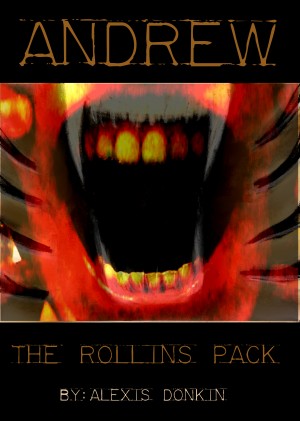
That said, I am not a graphic artist. I've spent a lot of time and effort earning the knowledge of cover design I have, and it's imperfect. I went from horrible covers when I first started out, to something that is passable, and finally, with my new Rollins Pack covers, to something that is sort of, well, good.

You can, if you don't want to deal with this mess, pay someone else to make your cover. In fact, I would advise you do that if you have the resources to do so. If not, or if you're not concerned with graphics and just want a simple cover for a business book or something, use templates. There are a thousand and one sites that have resources for this.

If you choose to go the DIY route, do that. I never did that because, I have some art training and I wanted to learn the photo-editing skills it would take (also I didn't have the cash to pay someone else at the time).

If you're crazy or beyond broke, you can do what I did. Download GIMP for free (yay open source!). If you've worked with Adobe before, GIMP will feel relatively natural. If not, play around with it for a while. Spend some serious time doing this. Figure out the ideal scale for your cover, make sure to have it at least 300 DPI, and go to town. Download some free for commercial use fonts (there are a gagillion sites for this) and enjoy.

NOTE: This will take you a week of tweaking, especially if this is all new. Be patient and prepared to swear at your screen. Have things that are safe to throw nearby. And take breaks.

Categories


This is something that is somewhat arbitrary and mystical. For many books, the categories you choose will be cut and dry, but for others, you have wiggle room.

I honestly have no idea what categories to choose for most of my fiction - well, I should say, I struggle with categorization. But categories are important because this is how new readers may find you.

Actually, I lied. I know exactly what categories to choose. Choose the categories your ideal reader would choose.

*Blinks*

Who is this mythical ideal reader? For the Rollins Pack, they're late teen to early twenty-something males.  For Khloe Alwell, they're the same age, both male and female, who are deep into nerd culture. So sometimes labelling these books as YA is good, and then again, maybe it would be better to label them "new adult." My deciding factor was the age of the main character - so I keep them YA (If this is confusing, don't worry. We'll touch on this again in marketing and sales.).

PUBLISH!


Everything's entered on the publish page. You set a preliminary price (probably between 2.99 and 4.99 for the average ebook) and hit the publish button. You select all the different file types (of course!) and click through. Your book is in queue. You get an email saying it had no autovetter errors (if it did, follow the directions in the email). Now it gets reviewed and then, assuming everything's good (which is should be if you have good formatting) your book gets pushed to all the major online retailers.

Sit back and smile.

You are now an independently published author.

*******************
If you have tips or tricks on descriptions, cover art, or categorization (or like a different digital distributor) leave a comment below! I love learning more about indie publishing and I know other readers will too!

Also check out my next post in this series on publishing print-on-demand where I will talk about the differences in that process. 

And please support your local, lovely indie bootstrapper, by visiting my website to donate or buy my books! All the links on my site give me maximum royalty percentages, as opposed to supporting big companies.

Monday, July 13, 2015

How to be an Indie Author 4: Formatting

This is the fourth post in a series about self-publishing from ideation through sales. To check out other posts in this series, click here.


Last time I wrote about editing, which most writers think of as the bear in the process. I'm here to tell you, that formatting is just as tedious, if not more so. This is where the real work for the indie author begins.

The Indie Difference

Indie tools: coffee, notepad, pen, & laptop
Formatting is a serious difference between traditionally published and independent authors. The reason is simple - this is the beginning of the publishing process.

Before we were working on the content. Editing, is really polishing content. Formatting, however, is making sure content is accessible in whatever form a manuscript takes.

For the purposes of this discussion, I'm going to talk about both digital and print-on-demand publishing. While there are many options in the wide world of digital and POD publishing, I will dive into the reasons why I made the choices I did for the distributors I did etc.

Digital

First, it should be noted, choosing a distributor will change your formatting process because different distributors do different things. For the most accessibility, I recommend the following things:
  1. Set up a style throughout your manuscript (for example first line indent for text body, chapter title/heading style for section titles).
  2. Get rid of any extra spaces unless they are necessary for content readability (extra lines, extra spaces, extra indents).
  3. Embed fonts if you're attached to them.
  4. Include a message at the beginning of your document reminding people if they got your book for free, to buy a copy because it was a lot of work to produce the book.
  5. Include an "About the Author" section at the end with a little bio about you.
  6. Include a "Connect Online" section that has all the major places readers can find you online.
  7. If you're really tech savvy, create hyperlinked table of contents that allows readers to jump easily to chapter headings (I'm not tech savvy, so I don't have this in my docs because every time I try things explode.).
Keep in mind, different file types will look differently in digital readers. If you have a reading app on your phone, ereader, or app on your computer, USE THEM. This is especially important when you're starting out because you won't have a system in place. That said, once you've done this a few times, it will become second nature, and you may decide to skip the ereader review altogether (like I do, for better or worse).

Also important to note is different distributors have different capacities. Some will only provide a single file type, like MOBI or EPUB (the most common). If you have to choose one kind of file, choose an EPUB file. However, I would strongly recommend that you not limit yourself to one type of file or one place to be read.

That said, if you have any confusion around formatting, or the distributor rejects your document for some reason, most have a guide or FAQ that you can reference for assistance. Smashwords, my ebook distributor, has a ton of resources for authors (and readers!) which are very accessible and easy to understand.

If you read all this and it stressed you out, however, you can pay someone else to format your work for you or buy a template to use. The cost varies significantly, and I cannot make recommendations this way because, well, I've never been a la cart. I've always been a bootstrapper (If you have recommendations for formatting services or templates, please comment below!).

Print-on-Demand

The second kind of formatting fun is, well, worse. Formatting for print is, as a friend once said, an art form. To format from scratch takes finesse and deep knowledge of printing.

Before you go through the nuts and bolts, make sure you include - just as you did for your digital copies - "About the Author" and "Connect Online" sections at the end of the manuscript.

Now that everything is where you need it, be sure you have selected your printer/distributor. Formatting requirements vary widely from company to company, and one set of formatting choices may not translate to another company.

In my next post on publishing, I'll talk about the reasons why you might choose one printer/distributor over another, but for the purposes of formatting, let's just recognize the two choices available (similar to digital):
  1. Use the template provided by the printer.
  2. Pay someone to go through the process for you.
If you use the template provided, make sure it matches the size of book you want (6'x9' for example). Make sure the pagination places everything on the correct page. So, the title page should have the binding margin on the left. The table of contents should start on a page with the binding margin on the left, etc.

If you pay someone else to do this for you, make sure they are comfortable with the printer/distributor you plan to use and you clearly communicate what size book you intend to have (5'x8' or 6'x9' or ?).

Even if you pay someone else to do this for you, check every chapter. Make sure there are no pages with a single word on them. Make sure the chapter headings are consistent. Make sure the fonts are what you want. Make sure the pages are tracking. Double check that binding margins are where they need to be. THIS IS IMPORTANT! If anything is wrong with the formatting, it will slow everything down. You will have to change the document, go over it again, and possibly again.

I cannot stress the importance of formatting. Once you have this process down, it makes everything easier and faster. But it does take some time to get comfortable and confident in this (I'm just now comfortable with POD and it's been almost 4 years since I started doing it!).

**************************
Do you have any tips or tricks to make sure your formatting is correct? Have any horror stories to share? Leave a comment below!

Check out my next post in this series on publishing where I will talk about why I chose the distributors/printers I did. And to support your local, lovely indie bootstrapper, visit my website to donate or buy my books! All the links on my site give me maximum royalty percentages, as opposed to supporting big companies. Buy a book there and see how my formatting went (or didn't!).

Monday, July 6, 2015

How To Be An Indie Author 3: Editing

This is the third post in a series about self-publishing from ideation through sales. To check out other posts in this series, click here.

Last post I wrote about the writing process, or turning an idea into a first draft. Now that you have a first draft, you must begin the intense and stress-inducing process of editing.

Editing is messy, but necessary.
When talking editing in writing circles, there is a lot of ambivalence, especially when thinking about publishers and "creative control" or final say over content and style.

"I can't believe he made me take out that scene! It's my best written scene!"
"I had to write out that character."
"But I really love adjectives!"

The list of complaints could go on however, editing is necessary.

Anyone who is a professional writer (or aspiring to be) understands the importance of good editing. Sometimes this means reworking a paragraph (or entire chapter) and other times it means slicing something in half. No matter what the requirement, the reason is always this: to create a more polished, precise, and effective piece of writing.

In this post I'm actually lumping editing and proofing into one major process. When I taught composition, we separated these two things into editing (content) and proofing (grammar, spelling, punctuation). For me, these two processes are intertwined, which is why I will discuss both in a single post.

First, Edit

There are two camps about editing for the indie author, but for the purposes of this post, I'm going to share my process (which admittedly has its limits).

Once I have a first draft, I let it sit for a while. Sometimes this means a month. Sometimes it means a year - it all depends on my publishing goals and how I feel about the manuscript generally.

Then I do a first reading where I focus on making sure I've communicated major ideas, double check whether characters are developed enough, and "tie up loose ends." This often includes cutting out repetitive sentences, assuring balance in lists, and making sure I'm being consistent throughout the manuscript.

This first read-through often includes correcting spelling, grammar, and punctuation errors, though it is not the primary focus. Ultimately, the focus here is content consistency/smoothness.

Then, Proof

Now that I have all the big fixes out of the way, I can move on to details. This is a second read-through where I double check all my "there, their, and they're" usage. Because let's face it, even though I know the difference, when I'm hammering out a first draft, I'm not always all there (see what I just did?). Sometimes I'm tired. Sometimes I'm thinking about the next chapter as I scramble to get my story all onto the page. So something gets lost in the writing, and I end up typing the wrong word.

Now, this is where we start seeing the difference between Big 6 (as in Harper Collins and Penguin) published authors and the indie author. This is what also separates Riot Grrrl bootstrappers like myself, and a la carters.

While Big 6 authors may go through this process before pitching their manuscript to an agent, they will get a professional proofreader courtesy of their publisher. Sometimes this is a good thing, and the person is really thorough and other times, they are a sleep deprived intern coffee-gofer. And an author won't know, except for a few typos still in the manuscript after publication (or too many adjectives, or not enough showing, and too much telling etc).

Indie authors, especially bootstrappers, do this themselves.

Let me repeat...bootstrappers do it on their own (this is me, I'm talking about here). So when there is a typo in the final manuscript, it's my personal fault. Seriously. And I got paid worse than a Big 6 publisher intern to not find it.

Hey! Beta, Beta, Beta!

The best friend of the bootstrapping indie is the beta reader. This is a third read-through, if you have the luxury of time, by someone else. Hopefully this involves several someones.

The most success I have had with betas (and this is supported by other author friends) is to ask specific questions:

"I'm having trouble in chapter 2, can you tell me if it follows well?"
"I'm worried I might offend someone with this section of the piece, but I don't want to alienate readers. How does it read for you?"
"I don't quite like this character. Tell me what you think."

The key here is to find people who will give thorough feedback. Outside of teachers (read: ESL and English Lit), and other writers, this will be hard to find. A lot of people will say things to the effect of, "It's good. I liked it."

*Blinks*

Obviously this is unhelpful and doesn't give good direction as to what needs work. Sometimes people will be wary of giving feedback because they don't want to offend you. They worry that criticizing your work will create rifts in your relationship.

Emphasize they have immunity. You are asking for specific feedback because you need it. Ask them to be completely honest. If they don't like something, tell them you need to know why. And say it's okay.

This really makes a difference in a beta's comfort level. And you want them to be comfortable.

Hired Guns

If you have resources, you may fall into the a la cart category of indie authors (lucky you!).

It is nice to have professional editors because they do this as their job. That means you are paying (often upwards of $200) for them to find all the errant apostrophes and theres. And they will.

Which is great.

The reason is it is a lot easier for someone else to find those little mistakes than it is for you. While beta readers are helpful, and should be used as a kind of test run for gauging the receipt of manuscripts, they are not professional. They are your friends, or some other writer you found through a Facebook Group.

So if you can hire a professional editor, then do it. It will help you sleep better (Probably - I wouldn't know.). If however, you are like me, here are a few tricks to get another level of correction into your manuscript:
  1. Read it out loud. You'll find mistakes you didn't realize were there.
  2. Use spell-checkers. Seriously.
  3. Run your manuscript through grammar checkers (they aren't all created equal but you can find a few for free online...try at your own risk, i.e. proof it every other way too.).

Finally

Some writers will over analyze and freak out about the editing portion of writing. And yes, you could pour over your manuscript for ages. You could go over it a thousand times and find something else to change.

And that would be a waste of time.

At some point you have to give up the neurosis of perfectionism and accept yourself (and therefore your writing) as good enough. Someone will always be better. Someone will always be worse. The more you go through this process, the better you will become.

Also, debut books are almost always crap. I know, you've read some Big 6 writers  that were God's gift to literature. That is the exception rather than the rule. Chances are those people wrote a ton before they ever wrote their first book. They may have been in ten writing groups, had professional writers go over their manuscripts, and of course, had the benefit of Big 6 publishing house resources.

Forget them.

Don't worry about them. This is about you and where you are. Getting out there is better than being stuck behind a process. Trust me. It is liberating.

That said, do what you feel comfortable doing. If you can't handle putting out a book that is obviously a first attempt, then don't. If you need to go over your manuscript a thousand times, you're not ready to publish. Period.

Indie publishing is not an easy path. It is not for everyone. And it most certainly can send perfectionists over the edge.

If you have the opposite problem, like me, and you just want to get everything out and into the world as soon as possible because your voice is bursting out of you...wait a second. Force yourself to read through your manuscript another time. Ask at least one other person to read the damn thing. Really. You'll thank yourself later. Trust me on this, I learned that one the hard way (i.e. 2nd editions of KHLOE ALWELL series for just that reason).

***************************
What is your editing process? Have you used the strategies above? To what success? Leave a comment below!

Be sure to check out the next post in this series, formatting! And to support your local, lovely indie bootstrapper, visit my website to donate or buy my books!

Thursday, December 5, 2013

40 Things I'll do When I'm a Billionaire...

Or rich and famous or whatever... everyone has a list of things they'd do or be. I'm feeling wistful so I decided to share some of the things I'd do if I was stupidly rich.

  1. Buy a boat - specifically a kayak. I frickin LOVE kayaks. Maybe two. I could go paddling with friends. That would be awesome.
  2. Pay off my debts - I don't know why this is second, but I guess I just like fun a little more. Still, this is something I'd like to get done.
  3. Buy some land, maybe a few plots in different locations. I REALLY want to build/design at least one house. I think it would be a marvellous adventure, and you can't beat the personalization.
  4. Establish a school and after school program. I show my academic stripes here, but honestly I've fantasized about this since I was in elementary school. I'd like to have something special, for kids who have something to them, whatever that might be (regardless of their economic status).
  5. Invest some money, you know, with the kind of plan that would make the Johnson family look like amateurs (Think 10 generations of wealth as opposed to 5! Beat that with your soap empire!).
  6. And what would I do with that investment money? Take care of my parents for one.
  7. And probably my in-laws as well.
  8. And of course set something up for my son - a trust of some sort that could only become accessible after he had genuinely tried to make his way in the world. Not a drop would be his until he'd done something with himself (the same with any other children should we have them).
  9. I'll hire a publicist who was more than worth her salt.
  10. I'll take dance lessons. A lot of them. Salsa. Ballroom. West African. Belly dancing. Hula. Swing. Hip-hop. I absolutely LOVE dancing.
  11. I'd get Lasik (well, I'd like to get Lasik anyway.).
  12. And with my new eyes I'd take up archery. There's nothing like shooting a sharp-ended stick at a target using a piece of tight string!
  13. I'll get regular massages, waxes, manicures, and pedicures. I believe in pampering.
  14. Go to writing conferences.
  15. Travel to all the places I really want to see, namely China, Ireland, Italy, Southern India, the Yucatan (assuming there's nothing violent happening there), Greece, Alaska, Hawaii, France, Germany, Japan, South Korea, Macao, Brazil, Egypt (again with the nothing violent business), and New Zealand (There's more places I'm sure, but I think that's a pretty good start.).
  16. Buy a few pieces of commercial property.
  17. I'll set up a foundation.
  18. Of course I'd start a few businesses.
  19. And I'd have to pursue all those crazy ideas I'm always having. I might even have to start a think tank just to research the viability of such ideas.
  20. I'd have to hire some personal staff, including but not limited to an assistant, accountant/financial advisor, and a lawyer. It's always good to have a few extra sets of hands to deal with the mess money makes.
  21. I will STILL be grateful for the wonderful things I have in my life, like my son, my husband, and my cat.
  22. Oh, and I will try to actually learn a couple languages (more than just the few choice phrases I've acquired throughout my education).
  23. I might buy a vineyard because that sounds fun!
  24. I will host nice gatherings where people who are genuine can mingle with other genuine people.
  25. Buy a space for an art and music studio.
  26. Go to plays.
  27. See awesome music shows.
  28. See dance troupes.
  29. Buy a really comfortable mattress.
  30. I'll have a few more kids.
  31. I might buy a horse.
  32. I'll find a designer who can handle curves to design my wardrobe.
  33. Someone else will cut and style my hair.
  34. Take several cooking classes to get a good handle on Asian dishes and bread/pastry making.
  35. I would start a non-profit consulting company that would help non-profits become more efficient/make the most of their resources.
  36. I might go to the dermatologist.
  37. I'll visit amusement parks.
  38. Volunteer at schools and/or local charities.
  39. Start a magazine or a newspaper/site.
  40. Most importantly, no matter what I did, I would always live life to the fullest.
There are other things I could dream up that hinge on obscene wealth (or even just moderate wealth), but the thing about this list is that it still comes from a particular place. Yes there is stuff on this list, but there are experiences as well. There is giving. I hope that should I come into money at some point, this approach to life won't change. Then again, a stack of money probably isn't enough to undo years and years of socialization in compassion and adventurousness. At least I hope not!

What would you do with a bagillion dollars? Leave a comment below!

Tuesday, April 23, 2013

Oakland Locally: Help Me Get Away From Big Business!

I hate big business.

I say this as I wear a shirt that was designed and manufactured for Target, typing on a lap top produced by Acer, on a website owned by Google.

Sigh.

And that's my point. We can try to get away from big business, but it is increasingly difficult. Some might even question why we should do such a thing. Let me suggest something to you, gentle reader. While some businesses have great labor practices and choose to employ people in the geographies they serve, this is not the norm. Some businesses may choose to be socially conscious by recycling, sourcing locally, and only building the best products that make the world a better place. This, again, is hardly the norm.

As I draw nearer to bringing a new life into this world, I can't help but consider the current state of the world. Sure, I see my work teaching art in East Oakland as a counter to all the pressures low income urban children face, but this is hard to measure. I do not know how much I impact these children's lives. I will never know. While I accepted that (and did so when I initially accepted the position) my contract is coming to an end. My attention begins to wander to other ways of making the world a better place, even to the point of examining the most mundane of daily choices.

This leads me to the question of local versus global. Some products are incredibly difficult (or downright impossible) to produce locally. I accept that. I understand the logistics involved for sourcing certain materials as well as infrastructure. That doesn't mean I can't try to support those businesses and products that ARE made and sourced locally.

I have a long way to go on this front. This is where I need your help gentle reader. Do you know Oakland locally sourced businesses? Locally manufactured products? Just locally owned? The more of these I can round up the better, but I'm only one woman and there are limits to my researching ability (I sleep and some times get distracted by other topics and interests...ahem.).

Leave your suggestions in the comments or mention me on Twitter (@alexisdonkin).

Thanks a ton! Your Earth thanks you too (probably my unborn kid would as well, we'll give the kid the benefit of the doubt).

Wednesday, April 10, 2013

Minimalist Motherhood: Why Nurseries Are Pointless

Whenever people think of getting ready for a new baby, nurseries come to mind. The funny thing is, nurseries are completely pointless, unless you're a masochist and also hate babies.

Let me explain.

Babies don't need a room. They can't even focus their eyes. They need to eat every couple hours and poop themselves constantly. When they don't eat upon waking, they fuss. If left long enough, they cry. If you don't clean their butts soon enough, they get a rash which...(you guessed it!) can lead to crying.

All this means if you put a baby in a separate room at night, you're going to be getting up and down a lot more with a whole lot less sleeping than if you had the baby co-sleep in the bedroom with you. Less sleep means more zombie. More zombie means you will be cranky and less able to deal with the demands of your new eating and pooping machine. This is why having a nursery is a kind of excessive hate-filled endeavor. However this doesn't even touch the ridiculous amount of money spent on furniture that will not be used after the baby's second year.

Yes, babies are an additional expense, but they don't have to break the bank. They don't need a lot of space. They need diapers, cloths, a place to sleep, and food. If you're breastfeeding (as 99% of women should at least try to do) one of these things is built in. So why spend 1000s on a matching changing table, crib, dresser, and rocking chair (not to mention bouncy seat and swing)?

It's a gimmick. A sham. It's something big companies in Western society want you to feel like you need so you spend thousands of dollars to feel like you're good parents.

I'm not falling for it.

Of course, I can't. I don't have the space. But even if I did, I don't know what I would do with it. Having a separate place for baby clothes would be nice, but a changing table? A huge crazy crib? Cutesy pastel curtains that match cutsey pastel crib sheets? Bleh! It doesn't appeal at all.

I'd rather spend that money on something kiddo wants, like when s/he is 3 or 4 and has preferences for a room. Then we could paint a wall mural just for them. We could have bunk beds and fun collapsible cloth play spaces to create a special and wonderous space. Personally, I don't remember a nursery. I do remember the room I had as a toddler, and I remember loving it. That seems like a much better use of resources.

While I don't have the luxury of hiding my child and hating myself, many people do. I'd urge you to reconsider indulging in such a luxury. I think a happier baby and more sleep is a better choice.