Showing posts with label independent. Show all posts

Monday, July 20, 2015

How to be an Indie Author 5: Publishing Ebooks

This is the fifth post in a series about self-publishing from ideation through sales. To check out other posts in this series, click here.

In the last post for this series I wrote about formatting, the prep for publishing. Now is time to get into the nitty gritty of publishing.

This is a behemoth of a post with info about jacket summaries and cover art, so get comfortable. Let's talk about the thing you've been waiting for - the thing that makes an indie author, well, indie.

Digital Power

The bread and butter of indie publishing, the thing that really launched independent authors was the ebook. This is to authors as the MP3 is to musicians. It revolutionized the publishing world and allowed authors to take control of their publishing destinies directly - something that is completely novel (heh) in the history of publishing.

Also, publishing an ebook is something that a monkey can do.

Really.

Author Joe Konrath once challenged people to write and publish an ebook in 8 hours. And people did it. A lot of people did it. Because it is so dang easy.

The difference between publishing an average ebook and a good ebook is formatting (assuming all else is equal). If you have your formatting done by professionals, through a reliable template, or you're old hat at the process, you're golden.

Jacket Summary


Before you get to the publish page of Smashwords (my preferred e-publisher/distributor for its wide reach and high royalty percentage) you need to spend a little time on descriptions.

There are usually two descriptions you need to write - the short, which shows up on all online retailers, and the long, which only gets pushed to a few.

To be honest, I open a separate document which I save to my book folder as "Book Title Summary" and write as compelling a summary as I can, without concern for length. I know my long description is always shorter than the character count.

There are a lot of resources on how to write jacket summaries, but the thing that I've found the most helpful is:
  1. Look at best-selling book summaries in the same genre.
  2. Don't give everything away.
  3. Somewhere in your closing paragraph or last sentence use this formula: "[main character] must do [certain action] or [result]."
This formula is the 140 character Tweet you'll send out to catch people's attention. It's the lead for your elevator pitch. It's the thing that will get someone to buy the damn book. That said, this won't always work. Sometimes a description does well without this formula. For example here is the long description for BELOW THE BELT:
Alisa Greer excitedly begins her doctoral program in anthropology when she meets Dr. Corwin Pierce. An awkward genius, she swears his eyes change color as a result of the light, and his cold appearance can only be a figment of her imagination. Yet as Alisa gets closer to Pierce, things even more bizarre start happening on campus and at archaeological sites that all link back to him. Students go missing under strange circumstances and inexplicable displays of light occur at ancient sites across the globe. Frightened and fascinated, she can only begin to guess who or what he is. But the truth is more disturbing than she can imagine...
My quick and dirty way to get the short description is cut this down to size in the field on the publishing page. The key is to get the content and interest generation despite the shorter length. Here's the short description I have for the same book:
Alisa Greer excitedly begins her doctoral program in anthropology when she meets Dr. Corwin Pierce. As Alisa gets closer to Pierce, bizarre things start happening on campus and at archaeological sites that all link back to him. She can only begin to guess who or what he is, but the truth is more disturbing than she can imagine... 

Book Covers


Never judge a book by its cover, unless it's an ebook.

That may as well be the message of most "indie publishing gurus." As much as authors may wish people would not judge books by covers, they do. And let's face it, if an author doesn't spend the time to make their cover look nice, how can you be sure they spent the time on their book?

I say this, knowing full well I spend a shit-ton of time on my covers. In fact, they give me a tremendous amount of grief...and they don't look like anyone else's.
I did that on purpose because I wanted the art to reflect the nature of the stories. For the Khloe Alwell series, I wanted the covers to hint at an artist's sketchbook. The main character is an artist, and art is referenced throughout the books.

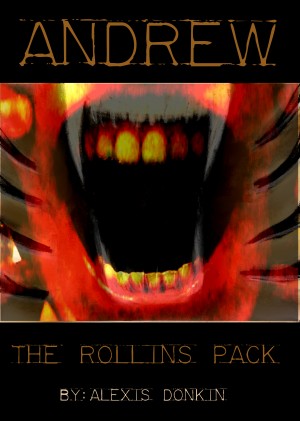
That said, I am not a graphic artist. I've spent a lot of time and effort earning the knowledge of cover design I have, and it's imperfect. I went from horrible covers when I first started out, to something that is passable, and finally, with my new Rollins Pack covers, to something that is sort of, well, good.

You can, if you don't want to deal with this mess, pay someone else to make your cover. In fact, I would advise you do that if you have the resources to do so. If not, or if you're not concerned with graphics and just want a simple cover for a business book or something, use templates. There are a thousand and one sites that have resources for this.

If you choose to go the DIY route, do that. I never did that because, I have some art training and I wanted to learn the photo-editing skills it would take (also I didn't have the cash to pay someone else at the time).

If you're crazy or beyond broke, you can do what I did. Download GIMP for free (yay open source!). If you've worked with Adobe before, GIMP will feel relatively natural. If not, play around with it for a while. Spend some serious time doing this. Figure out the ideal scale for your cover, make sure to have it at least 300 DPI, and go to town. Download some free for commercial use fonts (there are a gagillion sites for this) and enjoy.

NOTE: This will take you a week of tweaking, especially if this is all new. Be patient and prepared to swear at your screen. Have things that are safe to throw nearby. And take breaks.

Categories


This is something that is somewhat arbitrary and mystical. For many books, the categories you choose will be cut and dry, but for others, you have wiggle room.

I honestly have no idea what categories to choose for most of my fiction - well, I should say, I struggle with categorization. But categories are important because this is how new readers may find you.

Actually, I lied. I know exactly what categories to choose. Choose the categories your ideal reader would choose.

*Blinks*

Who is this mythical ideal reader? For the Rollins Pack, they're late teen to early twenty-something males.  For Khloe Alwell, they're the same age, both male and female, who are deep into nerd culture. So sometimes labelling these books as YA is good, and then again, maybe it would be better to label them "new adult." My deciding factor was the age of the main character - so I keep them YA (If this is confusing, don't worry. We'll touch on this again in marketing and sales.).

PUBLISH!


Everything's entered on the publish page. You set a preliminary price (probably between 2.99 and 4.99 for the average ebook) and hit the publish button. You select all the different file types (of course!) and click through. Your book is in queue. You get an email saying it had no autovetter errors (if it did, follow the directions in the email). Now it gets reviewed and then, assuming everything's good (which is should be if you have good formatting) your book gets pushed to all the major online retailers.

Sit back and smile.

You are now an independently published author.

*******************
If you have tips or tricks on descriptions, cover art, or categorization (or like a different digital distributor) leave a comment below! I love learning more about indie publishing and I know other readers will too!

Also check out my next post in this series on publishing print-on-demand where I will talk about the differences in that process. 

And please support your local, lovely indie bootstrapper, by visiting my website to donate or buy my books! All the links on my site give me maximum royalty percentages, as opposed to supporting big companies.

Thursday, July 16, 2015

What am I worth?

I have changed my tactics to writing, blogging, and book selling, in large part because I am not where I want to be. Obviously, if you're not where you want to be, you need to do something differently. As part of that, I've been reading a lot. I've joined a thousand and one groups, forums, mailing lists - you name it. I've reached out to who knows how many different blogs, writers, publicity gurus etc.

About 75% of the time these people write back, in some way. Usually it is a helpful way.

In one particular instance, it was a situation where the person was making the age old case that you have to spend money to make money.

Now between the two of us, my husband and I have a little under $40k of student debt. My husband works in an industry that does not support its employees, in fact, they kind of shit all over them and then stomp on them, no matter how well trained they are. Of course, he makes too much money for us to qualify for government assistance. Our parents happen to live in one of the most expensive housing markets in the country, which means we have to live with them in order to have a place to stay and food to eat. My son has health care because of the ACA. Because of where we live, we have to commute to jobs, and because of a lack of childcare, it doesn't really make sense for me to work at this point.

This is the stress I carry on my shoulders every day.

I have tried a thousand and one tactics already to get my books into readers hands, and here is this person saying the only way I can be successful is by spending money. Money. Something I don't have right now - haven't had for a few years.

I wrote the guy and he actually wrote back, and said nothing I didn't already know. I was grateful he actually responded, but the response did something to me that was unexpected. He wasn't mean, in fact, he was very professional. But it was the fact that he told me things I already knew - things I felt like I couldn't do anything about.

I broke. I just broke. Here was this guy who was supposed to be a guru and he was telling me things I already knew. I felt so defeated.

Here I was, putting every last bit of soul and effort into this - and I still wasn't financially successful. I wasn't getting reviews. I wasn't getting people to buy my books. Granted, people love the books when they read them. Any time I talk to people about them they end up buying a copy. And loving it. Seriously. But I wasn't connecting to enough readers. People weren't coming across my books and buying them. I had a steady trickle of purchases, but nothing to write home about.

I felt like a failure. I was ready to jump off a bridge. The thought actually entered my mind. I cried the rest of the day.

Slowly reason seeped into my consciousness.

The voice (in this case my father's) said: You might not be able to buy another domain, but you could change the landing page to allow for multiple brands.
Me: Okay, I can do that. Next week on update day I can do that.
The voice: Stop 'asking' for reviews. Call in all your chips. Tell anyone and everyone who you know has read your books - I need reviews.
Me: Okay. I can do that. I'll do that.

I started doing that. I felt a little better.

The voice came back (in this case my husband's): You already knew the things this guy told you. Keep working at this. Keep tweaking things. Write a blog post about this. You have more.

I did. I felt even better.

The voice came back a third time (in this case the one in my head): There are more things I haven't done. Try them. See this through. I have a purpose. I am enough.

So here I am. I have a purpose to my writing. I want to educate empathy - specifically compassion. I want everyone to know what is possible in books, with characters, with life. I want to be a catalyst for social change. I want to leave a legacy for my son. This is my purpose.

When there is a purpose, things happen. I believe that. I have everything I need to realize my purpose. I believe I will encounter those driven to work with me. There are no accidents. No coincidences. There is will, and therefore way.

I am sharing all this because I know I'm not alone. My situation is one that has played out many times before over the centuries. I know every modern author isn't in quite as dire of straits as I am. A lot of writers have day jobs, or spouses who essentially sponsor them. I know a lot of people do not need their writing to work for them. And it is nice to have that. There is comfort in that.

I am not comfortable which is why I need you to understand exactly what is at stake for me - for people like me. I need you to know me. To understand my drive. To understand why I struggle every day to do and be more.

When you read my books, understand that through everything, I am baring myself. I am giving you a piece of me to carry with you. When you read my books, you are participating in my life through the lives of my characters. That is the gift I am giving you.

Now tell me, what is it worth?

Monday, July 13, 2015

How to be an Indie Author 4: Formatting

This is the fourth post in a series about self-publishing from ideation through sales. To check out other posts in this series, click here.


Last time I wrote about editing, which most writers think of as the bear in the process. I'm here to tell you, that formatting is just as tedious, if not more so. This is where the real work for the indie author begins.

The Indie Difference

Indie tools: coffee, notepad, pen, & laptop
Formatting is a serious difference between traditionally published and independent authors. The reason is simple - this is the beginning of the publishing process.

Before we were working on the content. Editing, is really polishing content. Formatting, however, is making sure content is accessible in whatever form a manuscript takes.

For the purposes of this discussion, I'm going to talk about both digital and print-on-demand publishing. While there are many options in the wide world of digital and POD publishing, I will dive into the reasons why I made the choices I did for the distributors I did etc.

Digital

First, it should be noted, choosing a distributor will change your formatting process because different distributors do different things. For the most accessibility, I recommend the following things:
  1. Set up a style throughout your manuscript (for example first line indent for text body, chapter title/heading style for section titles).
  2. Get rid of any extra spaces unless they are necessary for content readability (extra lines, extra spaces, extra indents).
  3. Embed fonts if you're attached to them.
  4. Include a message at the beginning of your document reminding people if they got your book for free, to buy a copy because it was a lot of work to produce the book.
  5. Include an "About the Author" section at the end with a little bio about you.
  6. Include a "Connect Online" section that has all the major places readers can find you online.
  7. If you're really tech savvy, create hyperlinked table of contents that allows readers to jump easily to chapter headings (I'm not tech savvy, so I don't have this in my docs because every time I try things explode.).
Keep in mind, different file types will look differently in digital readers. If you have a reading app on your phone, ereader, or app on your computer, USE THEM. This is especially important when you're starting out because you won't have a system in place. That said, once you've done this a few times, it will become second nature, and you may decide to skip the ereader review altogether (like I do, for better or worse).

Also important to note is different distributors have different capacities. Some will only provide a single file type, like MOBI or EPUB (the most common). If you have to choose one kind of file, choose an EPUB file. However, I would strongly recommend that you not limit yourself to one type of file or one place to be read.

That said, if you have any confusion around formatting, or the distributor rejects your document for some reason, most have a guide or FAQ that you can reference for assistance. Smashwords, my ebook distributor, has a ton of resources for authors (and readers!) which are very accessible and easy to understand.

If you read all this and it stressed you out, however, you can pay someone else to format your work for you or buy a template to use. The cost varies significantly, and I cannot make recommendations this way because, well, I've never been a la cart. I've always been a bootstrapper (If you have recommendations for formatting services or templates, please comment below!).

Print-on-Demand

The second kind of formatting fun is, well, worse. Formatting for print is, as a friend once said, an art form. To format from scratch takes finesse and deep knowledge of printing.

Before you go through the nuts and bolts, make sure you include - just as you did for your digital copies - "About the Author" and "Connect Online" sections at the end of the manuscript.

Now that everything is where you need it, be sure you have selected your printer/distributor. Formatting requirements vary widely from company to company, and one set of formatting choices may not translate to another company.

In my next post on publishing, I'll talk about the reasons why you might choose one printer/distributor over another, but for the purposes of formatting, let's just recognize the two choices available (similar to digital):
  1. Use the template provided by the printer.
  2. Pay someone to go through the process for you.
If you use the template provided, make sure it matches the size of book you want (6'x9' for example). Make sure the pagination places everything on the correct page. So, the title page should have the binding margin on the left. The table of contents should start on a page with the binding margin on the left, etc.

If you pay someone else to do this for you, make sure they are comfortable with the printer/distributor you plan to use and you clearly communicate what size book you intend to have (5'x8' or 6'x9' or ?).

Even if you pay someone else to do this for you, check every chapter. Make sure there are no pages with a single word on them. Make sure the chapter headings are consistent. Make sure the fonts are what you want. Make sure the pages are tracking. Double check that binding margins are where they need to be. THIS IS IMPORTANT! If anything is wrong with the formatting, it will slow everything down. You will have to change the document, go over it again, and possibly again.

I cannot stress the importance of formatting. Once you have this process down, it makes everything easier and faster. But it does take some time to get comfortable and confident in this (I'm just now comfortable with POD and it's been almost 4 years since I started doing it!).

**************************
Do you have any tips or tricks to make sure your formatting is correct? Have any horror stories to share? Leave a comment below!

Check out my next post in this series on publishing where I will talk about why I chose the distributors/printers I did. And to support your local, lovely indie bootstrapper, visit my website to donate or buy my books! All the links on my site give me maximum royalty percentages, as opposed to supporting big companies. Buy a book there and see how my formatting went (or didn't!).

Monday, July 6, 2015

How To Be An Indie Author 3: Editing

This is the third post in a series about self-publishing from ideation through sales. To check out other posts in this series, click here.

Last post I wrote about the writing process, or turning an idea into a first draft. Now that you have a first draft, you must begin the intense and stress-inducing process of editing.

Editing is messy, but necessary.
When talking editing in writing circles, there is a lot of ambivalence, especially when thinking about publishers and "creative control" or final say over content and style.

"I can't believe he made me take out that scene! It's my best written scene!"
"I had to write out that character."
"But I really love adjectives!"

The list of complaints could go on however, editing is necessary.

Anyone who is a professional writer (or aspiring to be) understands the importance of good editing. Sometimes this means reworking a paragraph (or entire chapter) and other times it means slicing something in half. No matter what the requirement, the reason is always this: to create a more polished, precise, and effective piece of writing.

In this post I'm actually lumping editing and proofing into one major process. When I taught composition, we separated these two things into editing (content) and proofing (grammar, spelling, punctuation). For me, these two processes are intertwined, which is why I will discuss both in a single post.

First, Edit

There are two camps about editing for the indie author, but for the purposes of this post, I'm going to share my process (which admittedly has its limits).

Once I have a first draft, I let it sit for a while. Sometimes this means a month. Sometimes it means a year - it all depends on my publishing goals and how I feel about the manuscript generally.

Then I do a first reading where I focus on making sure I've communicated major ideas, double check whether characters are developed enough, and "tie up loose ends." This often includes cutting out repetitive sentences, assuring balance in lists, and making sure I'm being consistent throughout the manuscript.

This first read-through often includes correcting spelling, grammar, and punctuation errors, though it is not the primary focus. Ultimately, the focus here is content consistency/smoothness.

Then, Proof

Now that I have all the big fixes out of the way, I can move on to details. This is a second read-through where I double check all my "there, their, and they're" usage. Because let's face it, even though I know the difference, when I'm hammering out a first draft, I'm not always all there (see what I just did?). Sometimes I'm tired. Sometimes I'm thinking about the next chapter as I scramble to get my story all onto the page. So something gets lost in the writing, and I end up typing the wrong word.

Now, this is where we start seeing the difference between Big 6 (as in Harper Collins and Penguin) published authors and the indie author. This is what also separates Riot Grrrl bootstrappers like myself, and a la carters.

While Big 6 authors may go through this process before pitching their manuscript to an agent, they will get a professional proofreader courtesy of their publisher. Sometimes this is a good thing, and the person is really thorough and other times, they are a sleep deprived intern coffee-gofer. And an author won't know, except for a few typos still in the manuscript after publication (or too many adjectives, or not enough showing, and too much telling etc).

Indie authors, especially bootstrappers, do this themselves.

Let me repeat...bootstrappers do it on their own (this is me, I'm talking about here). So when there is a typo in the final manuscript, it's my personal fault. Seriously. And I got paid worse than a Big 6 publisher intern to not find it.

Hey! Beta, Beta, Beta!

The best friend of the bootstrapping indie is the beta reader. This is a third read-through, if you have the luxury of time, by someone else. Hopefully this involves several someones.

The most success I have had with betas (and this is supported by other author friends) is to ask specific questions:

"I'm having trouble in chapter 2, can you tell me if it follows well?"
"I'm worried I might offend someone with this section of the piece, but I don't want to alienate readers. How does it read for you?"
"I don't quite like this character. Tell me what you think."

The key here is to find people who will give thorough feedback. Outside of teachers (read: ESL and English Lit), and other writers, this will be hard to find. A lot of people will say things to the effect of, "It's good. I liked it."

*Blinks*

Obviously this is unhelpful and doesn't give good direction as to what needs work. Sometimes people will be wary of giving feedback because they don't want to offend you. They worry that criticizing your work will create rifts in your relationship.

Emphasize they have immunity. You are asking for specific feedback because you need it. Ask them to be completely honest. If they don't like something, tell them you need to know why. And say it's okay.

This really makes a difference in a beta's comfort level. And you want them to be comfortable.

Hired Guns

If you have resources, you may fall into the a la cart category of indie authors (lucky you!).

It is nice to have professional editors because they do this as their job. That means you are paying (often upwards of $200) for them to find all the errant apostrophes and theres. And they will.

Which is great.

The reason is it is a lot easier for someone else to find those little mistakes than it is for you. While beta readers are helpful, and should be used as a kind of test run for gauging the receipt of manuscripts, they are not professional. They are your friends, or some other writer you found through a Facebook Group.

So if you can hire a professional editor, then do it. It will help you sleep better (Probably - I wouldn't know.). If however, you are like me, here are a few tricks to get another level of correction into your manuscript:
  1. Read it out loud. You'll find mistakes you didn't realize were there.
  2. Use spell-checkers. Seriously.
  3. Run your manuscript through grammar checkers (they aren't all created equal but you can find a few for free online...try at your own risk, i.e. proof it every other way too.).

Finally

Some writers will over analyze and freak out about the editing portion of writing. And yes, you could pour over your manuscript for ages. You could go over it a thousand times and find something else to change.

And that would be a waste of time.

At some point you have to give up the neurosis of perfectionism and accept yourself (and therefore your writing) as good enough. Someone will always be better. Someone will always be worse. The more you go through this process, the better you will become.

Also, debut books are almost always crap. I know, you've read some Big 6 writers  that were God's gift to literature. That is the exception rather than the rule. Chances are those people wrote a ton before they ever wrote their first book. They may have been in ten writing groups, had professional writers go over their manuscripts, and of course, had the benefit of Big 6 publishing house resources.

Forget them.

Don't worry about them. This is about you and where you are. Getting out there is better than being stuck behind a process. Trust me. It is liberating.

That said, do what you feel comfortable doing. If you can't handle putting out a book that is obviously a first attempt, then don't. If you need to go over your manuscript a thousand times, you're not ready to publish. Period.

Indie publishing is not an easy path. It is not for everyone. And it most certainly can send perfectionists over the edge.

If you have the opposite problem, like me, and you just want to get everything out and into the world as soon as possible because your voice is bursting out of you...wait a second. Force yourself to read through your manuscript another time. Ask at least one other person to read the damn thing. Really. You'll thank yourself later. Trust me on this, I learned that one the hard way (i.e. 2nd editions of KHLOE ALWELL series for just that reason).

***************************
What is your editing process? Have you used the strategies above? To what success? Leave a comment below!

Be sure to check out the next post in this series, formatting! And to support your local, lovely indie bootstrapper, visit my website to donate or buy my books!

Friday, July 3, 2015

The State of Independence

No one is an island.
I've been thinking a lot about independence, specifically the ability to choose within a free framework, and the illusion of freedom.

It bothers me that anyone thinks they are free - that they are independent. No one really is. The idea that anyone can function in a vacuum, completely devoid of outside influences (total freedom, a nearly Buddhist state) is impossible in the material world.

You are not free.

There are levels, a spectrum of freedom, on which we can claim more choice or less. There are independent thinkers (I count myself one) who are able to observe a situation and choose based on their established principles and ideas as opposed to being swayed by popular opinion or carefully crafted marketing materials.

There are people who are independently wealthy (a flawed term, but for the purposed of discussion...) and able to control their environments by throwing money at problems, people, or things.

There are people who choose to isolate themselves from society, taking to the wilderness, foraging and homesteading as requirements dictate.

But in all these cases, pure independence, even in these situations, is impossible.

The independent thinker is dependent on their faculties of observation, their socialized influences, their friends, and the news for input to come to conclusions.

The independently rich person is entirely dependent on markets and systems that nurture wealth creation in order to maintain their status.

The hermit is dependent on the knowledge accumulated by society from generations in order to actively choose and succeed in his lifestyle of isolation.

The independent cannot function without outside assistance. They are, fundamentally, in relationship with the rest of the world. There is, no such thing, as independence (Happy Fourth!).

I can't help thinking about these things in relation to the work I do daily. While I am an independent author (i.e. not associated with a publisher) I do not function in a vacuum. I require many systems in place in order to do the work I do. In fact, without these systems, technological innovation, and the democratization of information, my work would be impossible. I would cease to be.

Unlike a large publishing house, I am a leaf on the wind. I can be blown this way or that by circumstances outside of my control. I can be crushed easily if systems are removed. I am still dependent.

More than anything, I am dependent on your support. You are my most crucial system, my most cherished dependency - my reader. To do what I do, I am dependent on everything you do - buying, reading, sharing, gifting, patronizing, encouraging, reviewing, and rating. And I am comfortable with this "vulnerability." So this weekend when my American readers are eating hamburgers, hot dogs, and shooting off fireworks, remember those people on whom you depend, and those who depend on you. We are all connected. We are all dependent. And that is a good thing.

*****************
As an indie author, I'm a bit like a local business and depend on the love and support of readers like you. Please check out my website where the "buy" links support me the most (and big business the least!). 

You can also support me through becoming a patron! Even $1 helps (but the more you support, the more rewards you get!)!

Monday, May 4, 2015

THRIVE Book Launch Week 6: Temping

Keep moving. It's all temporary.
Recently I had an epiphany, which is strangely related to THRIVE.

I realized even though I still get freaked out, depressed, or angry, even in the moment I see the experience of those feelings as temporary. Before, I felt bad and it made me feel like the whole world was awful and there was no light. Now I recognize I am reacting to a specific situation, which will pass, and it does nothing to hinder my progress.

Before I might have wallowed. Now I give myself the freedom to feel, accept the feeling, and then move on to do what has to be done.

My core situation is solid - I have my family. We love each other. Everything else is dressing. Everything else is a game. I move the pieces. I try different things. I experiment. I have fun. I get annoyed. And at the end of the day, I come back to my husband and son.

While I haven't been in war, I've been torn down enough to know that I have what really matters in life. I have family, friends, and an extensive support network who surround me with love. In this, I have been extraordinarily successful. And I am profoundly grateful for this situation, and for the epiphany that everything else in life is just fun and games.

Really.

That is not to say that my actions don't matter, or that I don't want to have a legacy for my son, or a positive impact on my community, country, and planet. I do want those things.But I am open to how they play out. I am detached from a specific result. I intend to enjoy the ride. I intend to enjoy helping as many people as I can with THRIVE. I intend to enjoy fulfilling the purpose given to me. I intend to enjoy every moment of life, even the angry, sad, or anxious ones. All of these things are gifts. All of them are part of the experience - part of the game.

And it's all good. Truly it is.

************************************
LAUNCH UPDATE

It's a bit of a mixed bag, and I feel like last week was a blur. Maybe the stress of the marathon involved with this process finally caught up to me. Whatever it was, I was exhausted all week and had trouble focusing on tasks. That said, I was able to finish the following:
  • Patreon blog post
  • Patreon art upload
  • Regular blog posts
  • Incorporated magicworkers' suggestions into press kit
  • Scheduled a meeting with a "connector" who has a lot of similar interests and influential friends
  • Finished west coast press kit contact database (in hopes of speaking engagements)
  • Reached out to connected friends at several universities
  • Finished revamping LOVERS & RIVALS
  • Determined ideal camera set up for videos
  • Recorded prelim/video tests (need to redo for the perfect ones)
  • 43% revamped LILITH & AMMON
  • 75% done with "influences" page on author website
  • Created "author ambassador" contact form and solicited from friends and other connections.
  • Downloaded fonts for new covers
  • Downloaded grammar extension for word processor
And the plan for this week is:
  • Finish LILITH & AMMON
  • Finish formatting THRIVE
  • Finalize revamped covers for KHLOE series
  • Patreon EXCLUSIVE upload of a short story
  • Blog posts
  • Finalize "influences" page
  • Finalize first video set (especially Patreon ones)
  • Upload KHLOE books with revamped covers to all outlets
  • Upload new covers to website & blog
  • Finalize east coast contact database
  • Have meeting with connector and follow up on any relevant brainstorming/ideas
I think that's it...but I'm a little scattered at the moment. I'm experiencing that temporary feeling of anxiety the closer I get to pre-order day (May 15). In the end, everything will be what it will be...BUT, I still don't want to get caught with my pants down. I know that everything could always get picked and prodded more, and that I just have to let that go. I can't know what people will get riled about, or what will speak to people. I can't worry about it. In the end, it was my life. You can't argue with experience. It was. It speaks for itself. And I can't control what others hear.

Thursday, April 30, 2015

BE MY PATRON!

If you love my blogging, my books, or just love supporting creatives, I strongly urge you to become my patron on Patreon.

What is Patreon?

Patreon is a site that lets fans connect with makers of any and all stripes.

How does it work?

You sign up as a subscriber and BAM! You're a patron! You get access to an exclusive community of fans, special rewards, personal interaction, and exclusive work before ANYONE ELSE. Any time I put up a piece of writing in a given month for patronage, your account is charged your pledge. BUT you are only charged up to the limit of your budget. SO if you pledge $3 and your budget is $6, you would only get charged twice, even if I put up 3 paid pieces. It is a win-win for both of us! You get to control how much you pledge, get access to awesome stuff before anyone else, AND support this indie author.

What do you have in store for patrons?

Not gonna lie. There are some AWESOME things heading the way of my patron page. In fact, I am working on a serial story, EXCLUSIVELY for patrons. That's right. IT WILL ONLY BE ACCESSIBLE TO PATRONS.

Once a month I intend to upload one episode/chapter of the story to the patron page. As the story develops, those patrons with access to the suggestion thread are able to comment on story direction for the next chapter. While I have a general plan as to where the story is going, it is meant to be an interactive experience with my patrons.

The premise? It is admittedly in its early stages at this point, but I am committed to the main character. I'll say more after the first episode/chapter is complete.

In addition to the serial story, I have some stand-alone shorts that will be accessible FIRST on Patreon. Also artwork inspired by different novels will be available to patrons. And maybe some of that artwork will be based on fan models! Hmm. I like that idea.

So, all this is to say, patronizing your sweet indie author is awesome. You get cool stuff and help a girl out. Become my patron today!

Tuesday, February 24, 2015

The Waiting Game

Watching time go by...
Lately all I do is wait. I'm just waiting. My own version of purgatory.

"A 34? Proceed to window 7. A 34? Proceed to window 7."

That is what I may as well hear. Because I'm waiting.

I'm waiting for responses to my doctoral applications. I'm waiting for those responses because I cannot make any choices without that information. Honestly, I haven't determined the choices I would make in hypothetical scenarios. So I snap at those closest to me. I curl in a ball on the couch. I hold on to the present as best as I can, as best as I ca wait.

I'm waiting for feedback on my nonfiction book. Waiting to respond to all those social media posts that clearly don't have experience in the things I do. That don't seem to understand what they are saying to people who share my secret life. Waiting to reveal myself, my history, for all its horrors and glory. Waiting to make a splash even as the waters are dark, filled with sharks and blood. Biting my nails. Donning my armor. Watching. Sharpening my sword. Waiting.

I'm waiting for someone to read book 4 in Khloe. Waiting to be ready to reread it. To rewrite it. To draw the cover that it is meant to have. To be inspired into that art. Waiting to publish it, for those fans loyal to the series. Waiting to push it against all those science deniers...waiting to connect it to the stories of the extreme things that should only be the stuff of fantasy, but are real. The drought...the storms...the insane snow...are real...and where do they come from? Waiting.

I'm waiting to get that mentor promised me. Waiting to hear back from websites. Waiting to get help recording videos - recording audio - creating platforms. Waiting to have enough time to work out. Waiting to decide what I want to do with my life. Waiting to pay off my debt. Waiting to change the world. Waiting to have people understand my deepest depths. Waiting to get a job. Waiting to be independent. Waiting to have the benefits I so desperately need - the rewards I so richly desire. Waiting. Waiting. Waiting.

I am not a patient person. I have done all that I can do to prepare. I have done all I can do to hold on to this vision in my head of a future, of a more wonderful life. I just can't wait any more. I can't stand another day. I can't stand another hour - another minute - another second. It is crushing my spirit - my mind - my heart.

I just want to hear...

"Alexis? Proceed to window 1. Alexis? Proceed to window 1."

Monday, June 30, 2014

Throw That Book: Celebrate Freedom

Freedom. Glorious freedom.
Liberation.
Independence.

Tis a gift to be free. Yes...or is it?

I'm not talking about the holiday coming up. I'm talking about the liberation of books.

FREE OUR BOOKS! BOOK LIBERATION!

A tweep of mine recently had her books show up on a piracy site and as many would be, was upset by this.

The first thing I thought?

I wish one of my books had enough attention to be on a pirate site.

Yes, I would probably lose some money on that book...but...I might gain some fans.

There is a tension between possession of a creative product and accessibility. I think of Louis C.K. who put up a special, DRM free, and had a tip jar situation. He made a bunch of money even though he didn't require payment. Was it a question of demographics? Celebrity? Product itself? Or was it simply the fact that he ventured to trust people enough with his craft they were so moved to support him despite its free price tag?

I have in the past made books free as well as had give aways. I have also given free chapters and of course, my ZEPHYRS short story has always been free. I don't have a tip jar, though I wouldn't mind listing a book on NOISETRADE (can I please?). All my books on Smashwords are DRM free. I did that because I want to trust people and encourage them to support art because it is good, brings them joy, and they want more of it.

On the one hand, if I was on a pirate site, I can see getting mad. On the other, would I be doing my job if my books weren't free somewhere...somehow? Probably not.

So while I don't require payment, I do expect some kind of compensation. PR will do nicely. Money would be good too. :-)

Saturday, June 21, 2014

Bootstrappers, A La Carts, and Whole Hogs

I hate the word "independent" because I feel like it's false advertising. Writers should come with labels just like vegetarians:

I'm a pesca-ova-lactarian.
I eat cheese, and chicken, but no beef.
I'm a cheese and veggie kind of girl.
No, I don't even eat honey.

Now, to be honest, I think anyone who eats any kind of animal flesh cannot call themselves vegetarian. When it comes to animal products, I think there are really three categories of food consumers: vegans (purists), vegetarians (digestively challenged?), and everyone else (see-foodists).

That's kind of how I feel about writing, but maybe there's a few additional categories.

There's the traditional writers (whole hogs), or those who went with publishers (big 6 or otherwise). Then there are the hybrid writers, which are kind of like those pesca-ova-lacta-poultry-bullshit vegetarians - trying to reap the rewards of both labels (many of them doing an excellent job, it should be noted!).

Then of course, there are the a la carts. These are people who pay someone else to do various writing services. Now, I'm not saying it isn't a good idea to involve other people, or that we don't need help...but...call a spade a spade. A. LA. CART.

And finally, there's the bootstrappers. The purists. The people who are so committed to the idea of indie, it's embarrassing. I have pictures of these people in my head - you know, that crazy straight-edge punk in your freshman dorm who wrote "straight-edge" in his own blood and then listened to the Misfits all day? Yeah. Those people. Totally bonkers. I mean, why - why - would anyone in their right mind choose to go completely DIY?!

Ahem.

*waves frantically with both hands while jumping up and down and grinning maniacally*

HIIiiiiii! That'd be me.

I'm a bootstrapper. I hate when someone who is only sort of independent claims this word. It's my word. It belongs to people like me. I'm the epitome of independent. I do everything myself. I'm responsible for my complete success or failure. I'm responsible for the flowery words, the typos, the turns of phrase, and the paragraph going off on someone's delicious sandwich (food centered today apparently). Me. Only me. I'm the American myth - the American legend. I am the American dream. I'm completely, beautifully, gloriously independent. Those other guys are posers! Pretenders! They say you need to have an editor. You need to go to conferences. You need to have a cover designer. But that's bullshit. I don't need these things. I can do it myself.

Be precise with your language people! I mean, we're frickin' writers here!

I imagine this is what being vegan must feel like.

Sort of.

Except, the thing is, help is nice. I don't actually begrudge people for paying for services. I just hate feeling like everyone has a sugardaddy footing their service bill. I mean, those conference tickets are expensive. Hundreds of dollars could pay my monthly loan payment (one of them anyway). As my starving artist indie self, I really can't purchase entry to a writer's conference. I can't justify spending hundreds of dollars on editing services when I need to buy clothes for my baby and tools so my husband can do his job.

I'm not in the same league as these other "indie" authors. We're not in the same league because we have different levels of support. Living on one income, while being a stay at home mom, and writing...it's not easy. Granted, I was forced to develop a bunch of skills. I was forced to research things on my own. I was forced to do things that if I'd been in a comfy big 6 situation, I would never have done. You know, like figuring out how to make beet burgers, kale chips, or baking with agave nectar.

There's a reason why bootstrappers are so tough. It might take us a while to get where we're aiming, but we'll get there. We stumble and we trip, and we take detours. But we do our own course correction. We figure it out on our own. I mean seriously, how much more American can you get.